
Damp, mould and ventilation
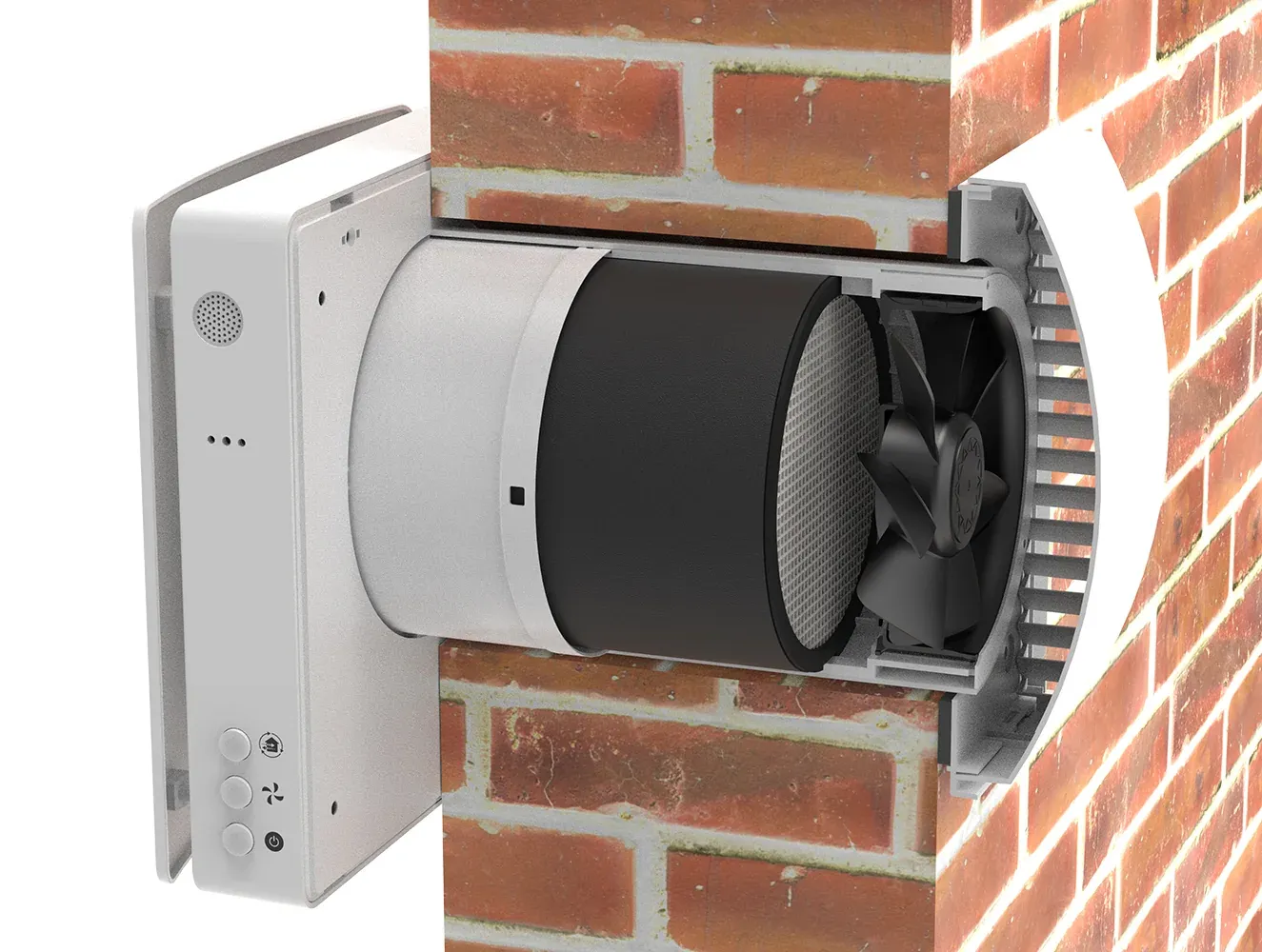
At a glance
- Damp affects 1 in 20 homes in England.
- Ventilation lets moisture leave the building.
- Damp and mould can affect the airways, lungs, eyes and skin.
- Ventara Air has a humidity sensor and switches to extract in response to high humidity.
Why ventilation matters
Damp is common in English homes and the rules for landlords are tighter. Every figure here links to its source.
1.4mhomes
in England had a damp problem in 2024. That is 5% of all homes.
Source 1: Ministry of Housing, Communities and Local Government (opens in a new tab)10%of private rented homes
had a damp problem in 2024. The figure for owner occupied homes was 4%.
Source 1: Ministry of Housing, Communities and Local Government (opens in a new tab)10working days
Social landlords must investigate a potential significant damp and mould hazard within 10 working days of becoming aware of it. Awaab's Law applies this from 27 October 2025.
Source 2: GOV.UK (opens in a new tab)24hours
Under Awaab's Law social landlords must investigate an emergency hazard and make it safe within 24 hours of becoming aware of it.
Source 2: GOV.UK (opens in a new tab)
“If a dwelling is inadequately ventilated, moisture in the air cannot escape the building and is therefore more likely to cause condensation.”
The same guidance says damp and mould primarily affect the airways and lungs and can also affect the eyes and skin. People with certain health conditions, children and older adults are at greater risk of more severe health impacts. Ventilation in dwellings in England is covered by Approved Document F, Volume 1 (opens in a new tab) of the Building Regulations. It has been in force since 15 June 2022.
Ventara Air has a humidity sensor. It switches to extract in response to high humidity.
- 1
English Housing Survey 2024 to 2025: headline findings on housing quality and energy efficiency (opens in a new tab). Ministry of Housing, Communities and Local Government, 29 January 2026.
- 2
Awaab's Law: guidance for social landlords, timeframes for repairs in the social rented sector (opens in a new tab). GOV.UK, 17 October 2025.
- 3
Understanding and addressing the health risks of damp and mould in the home (opens in a new tab). UK Health Security Agency and DLUHC, updated 15 August 2024.
- 4
Approved Document F: ventilation, Volume 1 dwellings (opens in a new tab). GOV.UK, in force 15 June 2022.
Ventilation options and installation advice
For sizing and installation requirements, ask a Ventara distributor.
- Humidity-responsive ventilationVentara Air Humidity uses one outside-wall opening. Its humidity sensor switches it to extract in response to high humidity.→
- Several rooms with outside wallsCompare the Air and Air+ models side by side. Air+ Humidity WiFi has a temperature sensor for free cooling.→
- A ducted system with a ceiling voidVentara Breathe supplies and extracts through ducts from one ceiling unit.→